


%20copy.jpg)

%402x.svg)
There is something quietly convincing about bamboo as a building material.
Unlike concrete or steel, which often arrive on a site as finished industrial products, bamboo carries evidence of where it came from. Its joints remain visible. Its curves follow the growth of the plant. Its surface changes with light, age and weather. Even when carefully engineered, it rarely loses the feeling of being a natural material.
In Lombok, where architecture exists within a landscape of hills, rice fields, coconut palms and open skies, this relationship between material and place feels particularly relevant.
But bamboo architecture is not sustainable simply because bamboo is natural. Sustainability is more complicated than choosing one material over another. It involves how a building sits on the land, how much energy it requires, how materials are sourced and maintained, how water moves through the site, and whether construction creates value for the communities around it.
At its best, bamboo architecture becomes part of this larger conversation: not an aesthetic trend, but a way of thinking about how buildings can exist with their environment rather than against it.
Read more: Lombok vs Bali 2026: Two Markets, Two Investment Cycles
Bamboo Is More Than a Material
Bamboo has been used across Indonesia for generations, long before contemporary architecture began presenting it as a symbol of sustainable design.
Its appeal is partly structural. Bamboo is lightweight relative to its strength, and its hollow cylindrical form allows it to carry loads efficiently. It also grows considerably faster than conventional timber species. Research on bamboo construction in the Mandalika area has noted that some bamboo species can reach usable maturity in roughly three to five years, compared with decades for many timber trees.
That growth cycle changes the way we think about a building material.
A tree can represent a long-term commitment to a particular piece of land. Bamboo, when responsibly cultivated and managed, can be harvested and renewed within a much shorter period. This makes it an interesting renewable resource for regions where bamboo is locally available.
But the word renewable should not automatically be confused with sustainable.
A bamboo building still requires transportation, treatment, connections, foundations, maintenance and skilled labour. Bamboo must also be properly protected from moisture, insects and deterioration if it is expected to perform over many years. The sustainability of the material therefore depends on the entire system around it.
This is where architecture becomes important.
The question is not simply, “Can we build with bamboo?”
It is, “How intelligently can we build with what is already available to us?”
Designing for the Climate, Not Against It
Sustainable architecture often begins before materials are chosen.
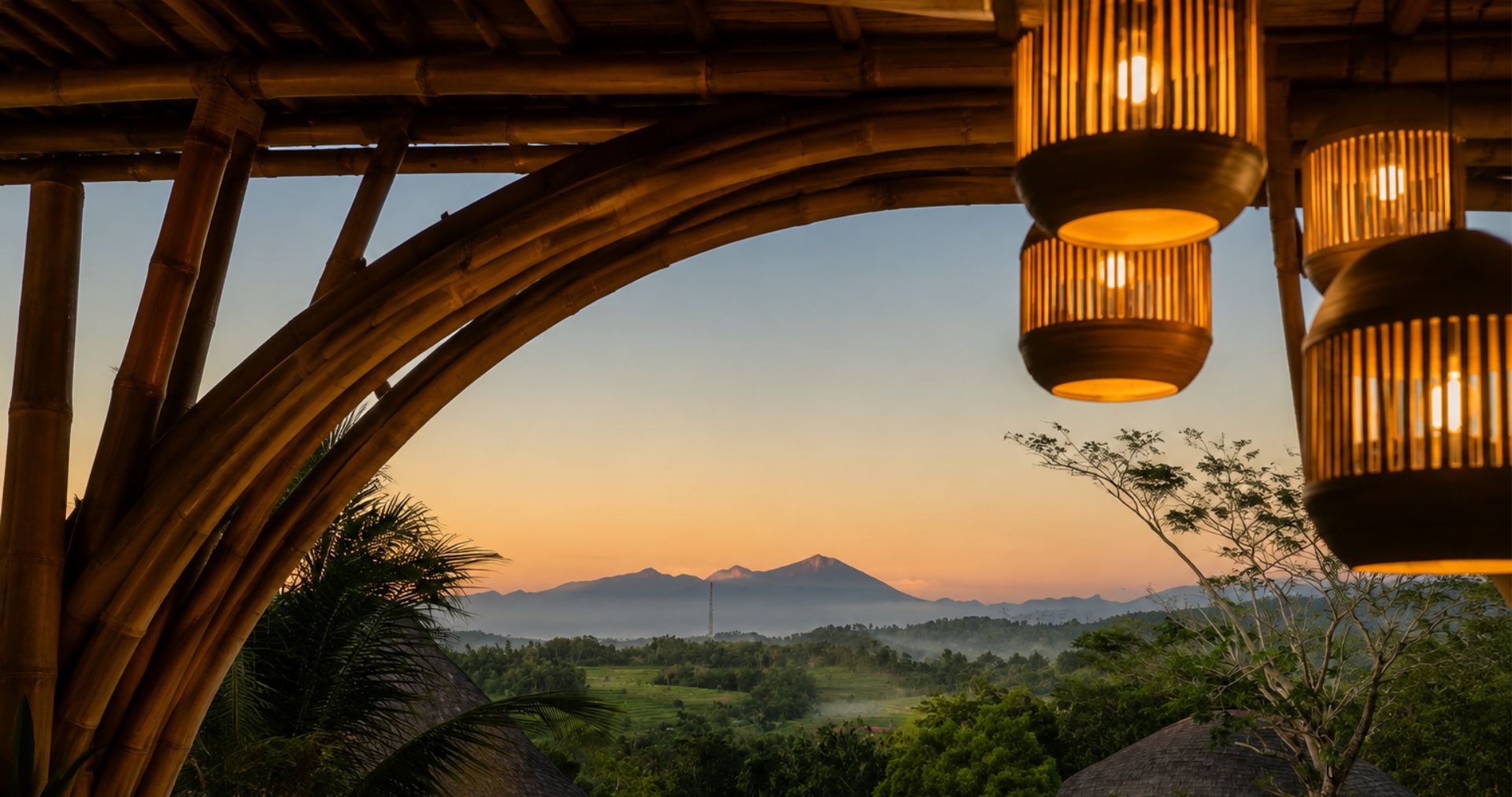
In a tropical climate like Lombok, the first question should be how a building responds to heat, wind, sunlight and rain. A well-designed building can reduce its dependence on mechanical systems simply by understanding these natural forces.
Openings can be positioned to encourage cross ventilation. Deep roof overhangs can protect walls and windows from intense sun and tropical rain. High ceilings allow warm air to rise, while shaded terraces create intermediate spaces between indoors and outdoors.
These decisions may appear simple, but they have a direct relationship with energy consumption and comfort.
Research into ecological architecture for resorts in the Kuta Mandalika area has similarly highlighted cross ventilation, vegetation, water catchment, environmentally responsible materials, renewable energy and waste management as important strategies for reducing the environmental impact of hospitality development.
This is particularly relevant to resort architecture.
A hotel or villa does not need to completely eliminate modern comfort. Air conditioning, hot water and lighting are part of contemporary hospitality. The more meaningful goal is to design the building so that these systems do not have to do all the work.
Architecture can take some of the pressure away.
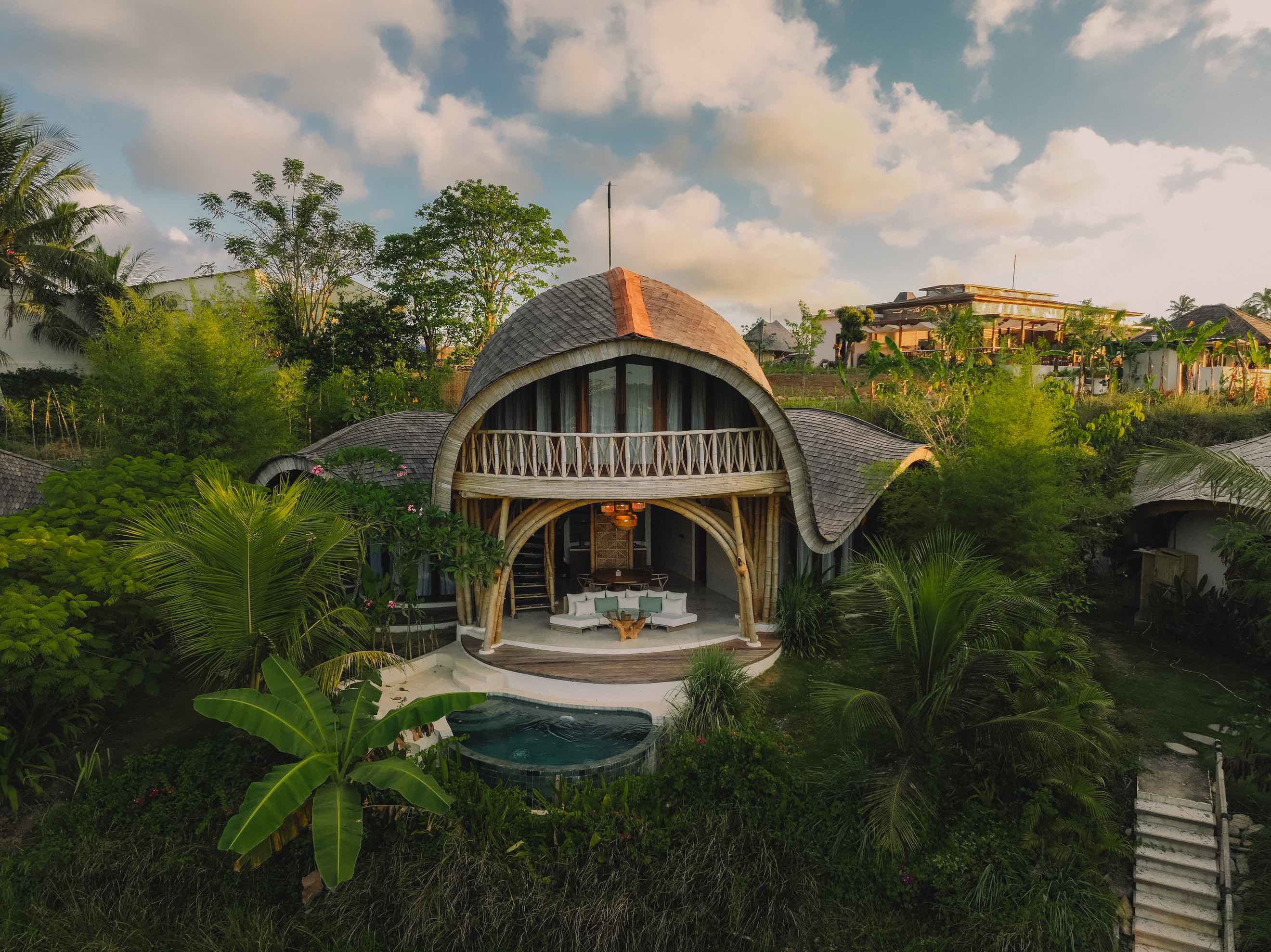
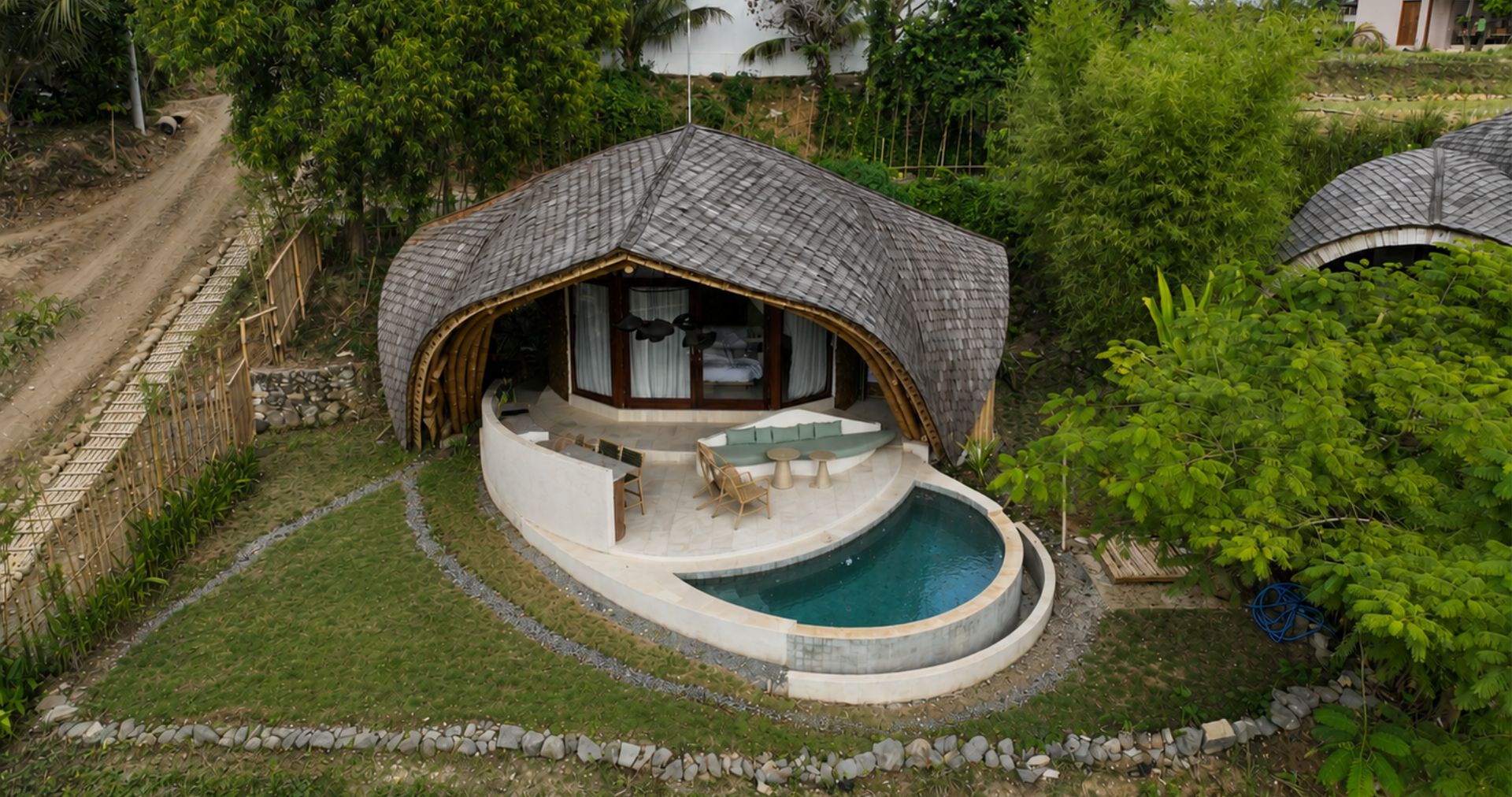
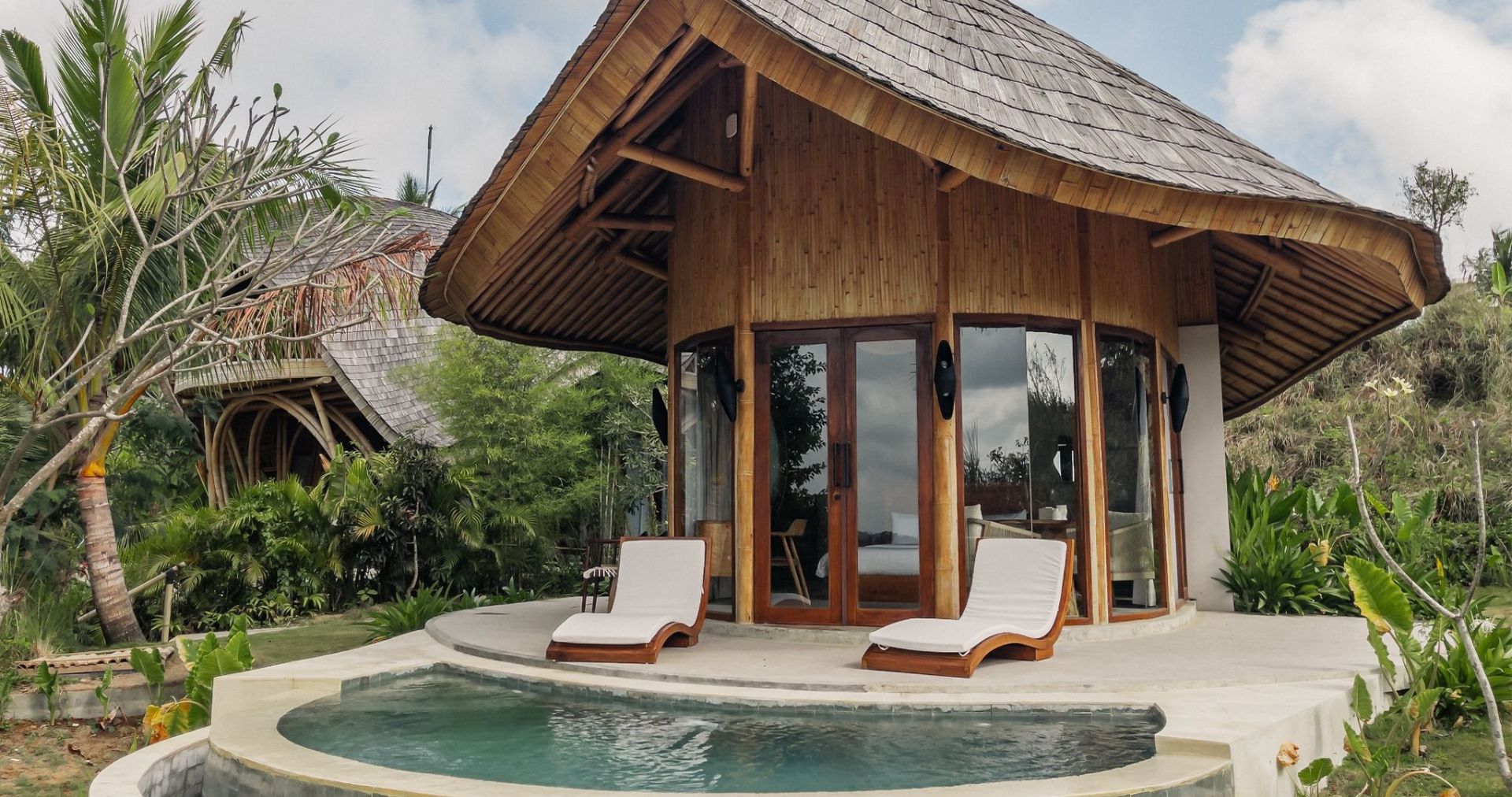
At Mandala, this approach can be seen in the way villas are conceived around open space, natural light and connections to the surrounding landscape. Villa Coralia, for example, uses a sweeping bamboo roof to create a vaulted interior while extending living spaces towards the outdoors.
The bamboo is therefore not simply decoration. Its form becomes part of the spatial experience.
When Structure Becomes Architecture
One of the most interesting qualities of bamboo is that its structural logic can become part of the visual language of a building.
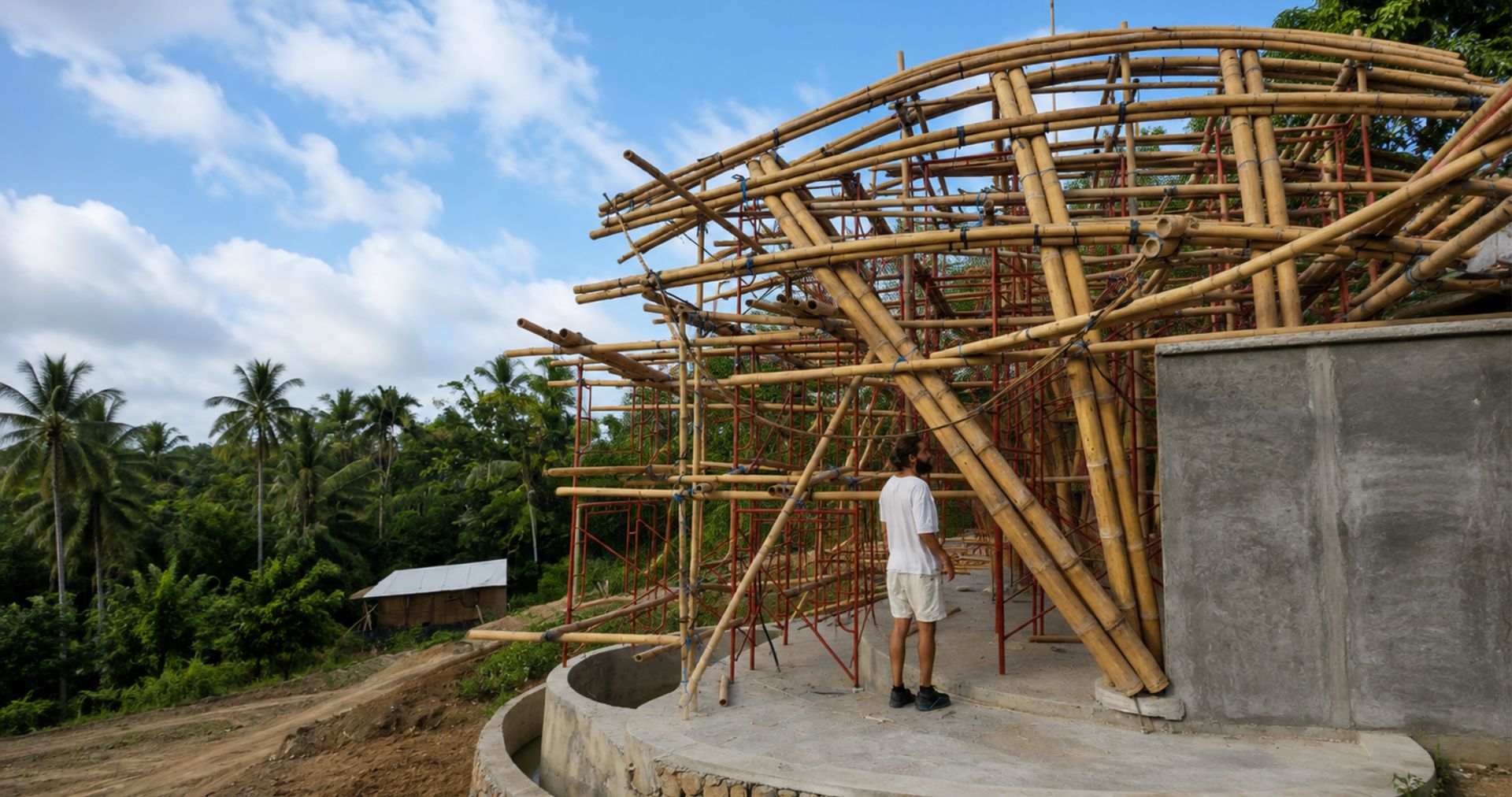
With conventional construction, structure is often concealed behind walls, ceilings and finishes. Bamboo can work differently. Columns, beams and roof members can remain visible, allowing visitors to understand how the building stands.
This creates a certain honesty.
The roof is no longer just a surface above a room. It becomes a visible composition of lines, joints and curves. The structure gives the space its character.
This is particularly powerful in hospitality architecture, where the atmosphere of a place is often as important as its function.
A bamboo roof can create softness without relying on excessive decoration. Its repetitive geometry can introduce rhythm. Its natural colour and texture can provide warmth. And because the material is inherently associated with the landscape, it can help soften the boundary between architecture and nature.
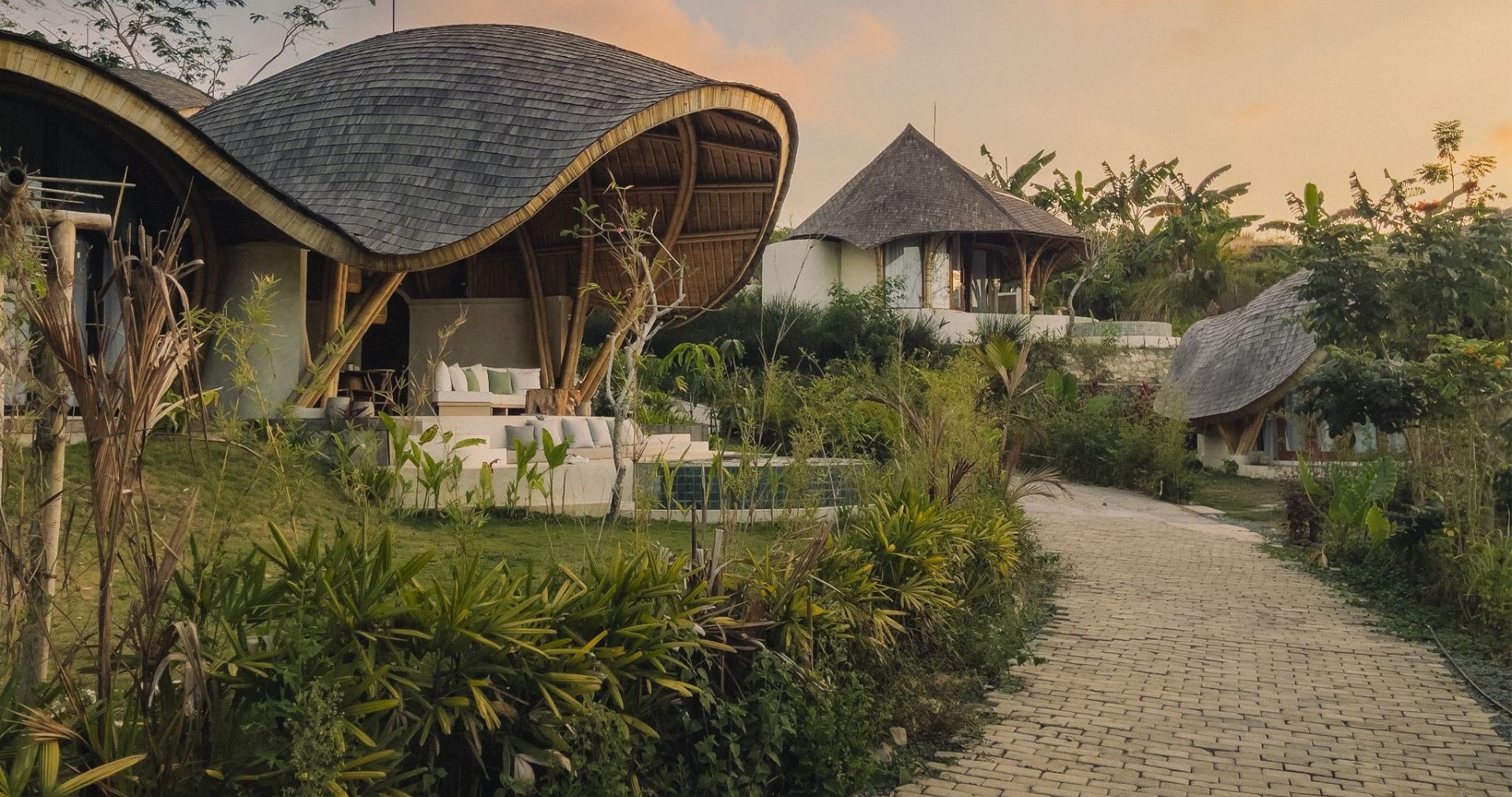
Mandala's Villa Coralia offers one example of this approach. Its vaulted bamboo roof creates a distinctive silhouette while allowing the living, dining and kitchen areas to open toward the surrounding landscape.
Elsewhere across the resort, curved and organic architectural forms are used to create spaces that feel connected to the surrounding environment rather than imposed upon it. Villa Naia, for instance, uses curved roofing and flowing forms inspired by the shapes of shells and the landscape around it.
The lesson is not that every sustainable building needs a dramatic curved roof.
It is that environmental thinking can influence form.
Building Lightly on the Land
Materials are only one part of sustainable architecture. The relationship between a building and its site can be equally important.
In a place like South Lombok, development takes place within a landscape that already has its own systems: water flows downhill, vegetation creates shade, soil absorbs rainfall, and existing trees provide habitat and microclimates.
Flattening a site and rebuilding it from scratch can erase many of these relationships.
A more sensitive approach is to allow the architecture to respond to the existing contours wherever possible.
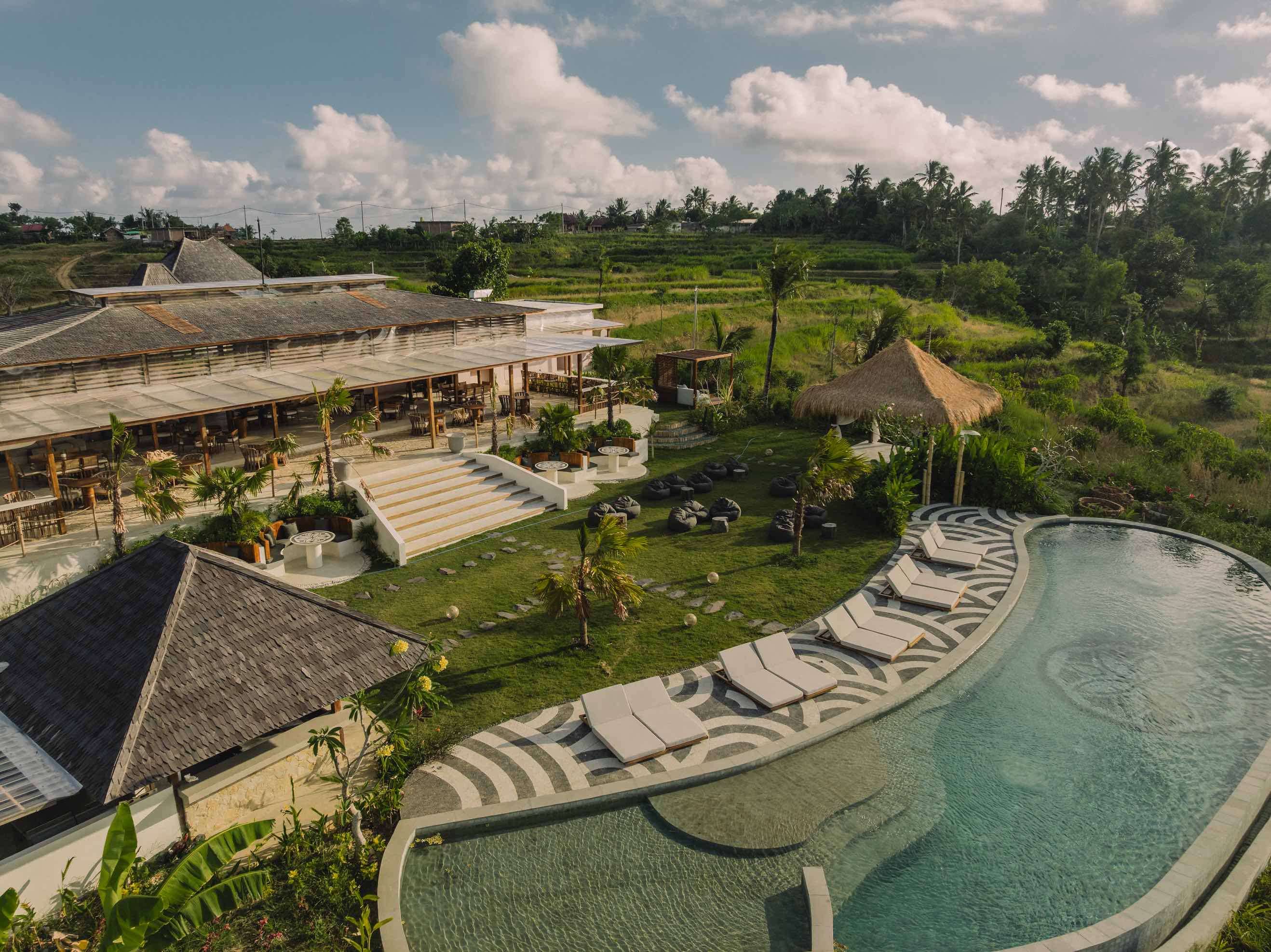
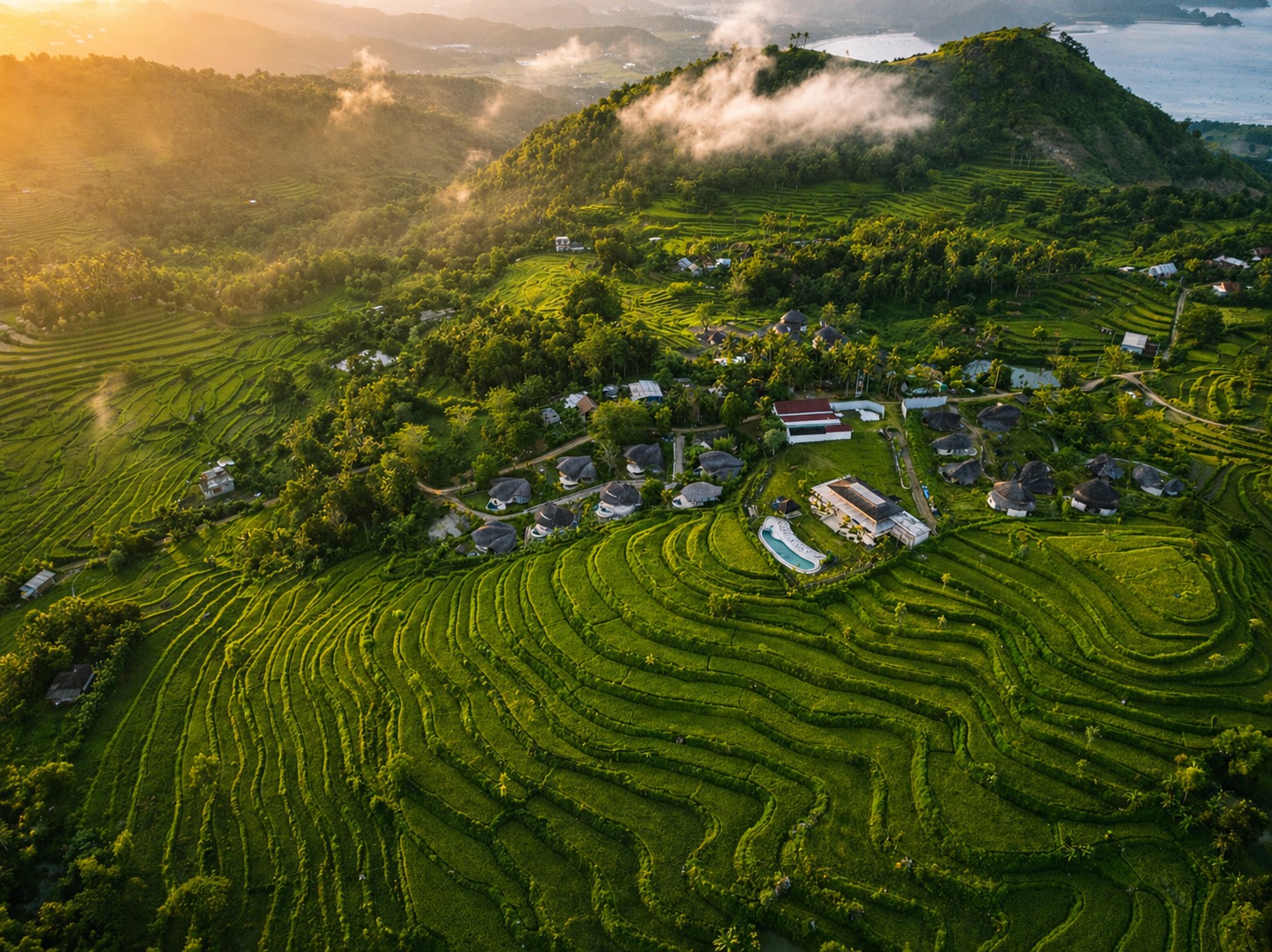
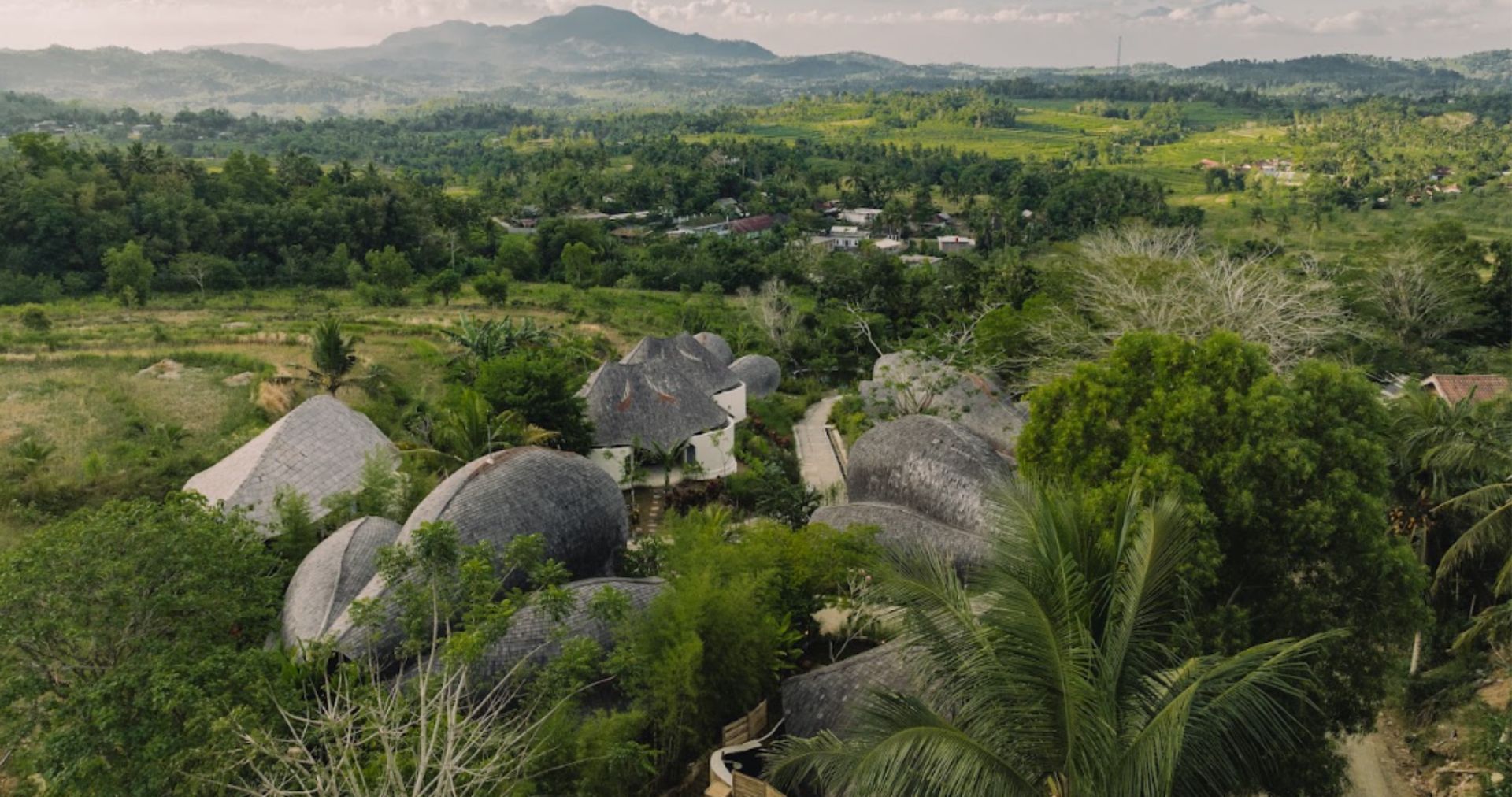
Mandala describes its development philosophy as following the natural contours of the land rather than reshaping the site by force. The surrounding rice fields, hills, gardens and ocean views are treated as part of the identity of the development rather than simply scenery outside it.
This way of thinking changes the role of landscape architecture.
A garden is no longer simply something planted after construction. Vegetation can become part of the environmental strategy, providing shade, helping manage water and creating cooler outdoor spaces.
The result can feel less like a building placed in nature and more like a series of spaces carefully positioned within it.
That distinction matters as Lombok develops.
As tourism grows, sustainable design cannot only mean building greener buildings. It also means asking how much land needs to be disturbed to create them.
Sustainability Is Also About People
It is easy to discuss sustainable architecture entirely through materials and energy.
But buildings are also social systems.
A truly sustainable project should consider who builds it, where materials come from, who maintains it and how economic value moves through the surrounding community.
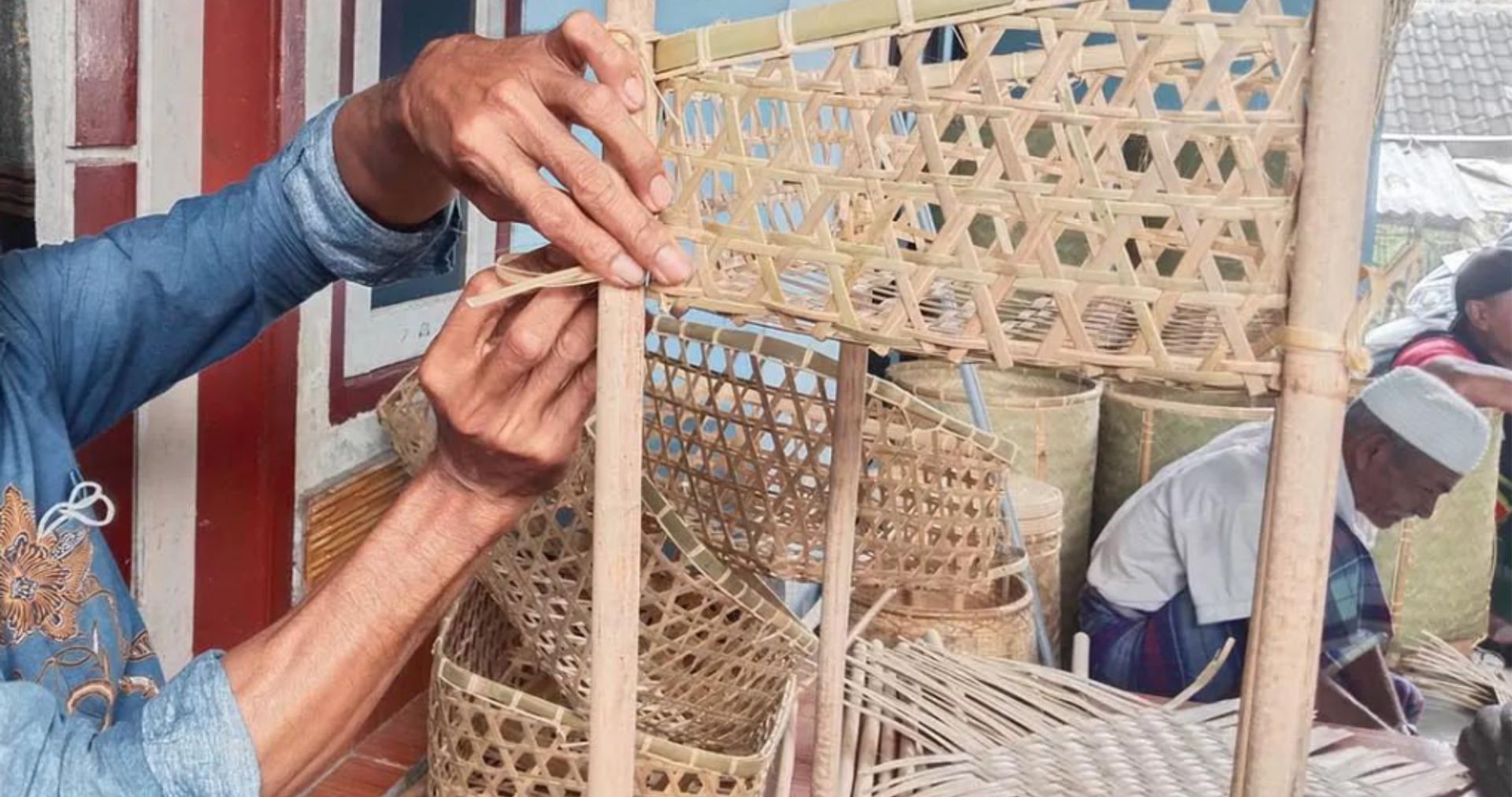
In Lombok, this is especially important because architecture and craft are closely connected to local knowledge. Using natural materials can create opportunities for skilled fabrication and craftsmanship, but only when local communities are genuinely included rather than treated as a visual reference.
Mandala's stated approach includes relationships with local farmers, craftspeople and cultural stewards, alongside fair wages, skills training and environmental education.
This broader definition of sustainability is worth paying attention to.
A bamboo building may reduce dependence on certain industrial materials, but its impact becomes more meaningful when the process of building also supports local skills and livelihoods.
The same principle applies to food and landscape. Mandala's farm-to-table approach, for example, connects its hospitality experience to locally grown and seasonal ingredients, while its wider philosophy includes permaculture and community participation.
Architecture does not exist independently from these systems.
A building is part of a local economy, a landscape and a culture.
The Beauty of Imperfection
Perhaps the strongest argument for bamboo architecture is not technical at all.
It is emotional.
Bamboo does not look manufactured in the same way as many contemporary building materials. Each piece has slight variations. The texture changes. The joints reveal how it was assembled. Over time, the material develops a character that polished industrial surfaces often lack.
This quality fits naturally with the slower rhythm of Lombok.
There is a growing desire in architecture and hospitality for spaces that do not feel excessively finished. People are increasingly drawn to environments where natural materials, changing light, open air and imperfect textures create a sense of calm.
But this should not be confused with making buildings look “rustic.”
The more interesting possibility is precision without sterility.
Bamboo can be carefully engineered and beautifully detailed while still retaining its natural character. The result does not have to look traditional or primitive. It can feel contemporary precisely because it allows the material to speak for itself.
That is where sustainable design becomes more than a checklist.
It becomes a question of values.
What do we want our buildings to communicate about the way we live?
A Different Idea of Luxury
For a long time, luxury architecture was defined by scale, permanence and material abundance. Sustainable design challenges that idea. Perhaps luxury is not about having more, but about having a better relationship with the materials we use, the climate we build in, and the landscape we build upon.
In a tropical environment, that can mean designing spaces that work with the climate rather than shutting it out — allowing natural air to move through the room, using shade thoughtfully, and letting the structure itself become part of the experience.
This is where bamboo architecture becomes particularly interesting. At Mandala, bamboo is part of a wider approach that brings together sustainable building, landscape, permaculture, community and slower living. Rather than being a feature in itself, it reflects a broader way of thinking about how a building belongs to its surroundings.
Sustainable architecture is ultimately about the many decisions behind a building: where it sits, how it responds to the climate, what materials are used, who makes them, and how the finished space relates to the landscape around it.
In Lombok, where the natural environment is such an important part of the island's identity, perhaps the most thoughtful architecture is architecture that knows when to step back. Bamboo offers one way to explore that balance — connecting material, climate, craft and place.
And perhaps that is where better architecture begins: not with how much we can build, but with how thoughtfully we choose to build within a place.



%402x%20(dark).svg)
%402x%20(dark).svg)
%402x.svg)


